
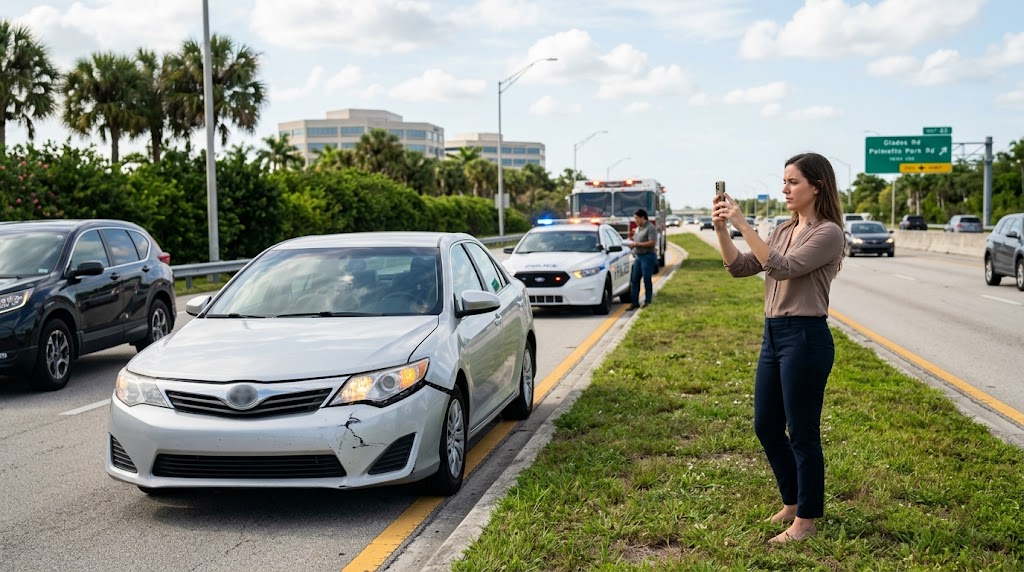
Anyone who drives around South Florida knows how quickly a smooth ride can turn into a headache.
Between heavy winter traffic, sudden downpours, and bumper-to-bumper commuters on Glades Road or I-95 near Palmetto Park Road, accidents happen in the blink of an eye.
One second you are heading home from work or pulling out of Town Center, and the next you are sitting on the side of the road with a damaged car or SUV, wondering what to do next.
Data from Florida Highway Safety and Motor Vehicles shows that Palm Beach County sees over 25,000 traffic collisions every year, causing more than 16,000 injuries.
Thousands of those crashes take place right here in Boca Raton and nearby spots like Delray Beach and West Palm Beach.
When a collision happens, having clear subheadings and steps to follow makes a world of difference.
Following a sensible Boca Raton accident protocol keeps you safe, protects your bank account from unexpected bills, and ensures your legal rights stay intact.
5 Essential Steps to Take at the Scene of a Boca Raton Crash
Taking specific actions immediately after a collision protects your personal safety and creates an official paper trail for your claim.
Step 1: Secure the Scene and Check for Injuries
Take a deep breath and check yourself and your passengers for physical harm. Look out for deep cuts, severe joint pain, or signs of head trauma.
If your vehicle is driveable and sitting in active traffic along I-95, Glades Road, or Federal Highway, carefully move it out of the travel lanes onto the shoulder or into a nearby parking lot.
Turn on your hazard lights right away to alert oncoming drivers.
Step 2: Contact Emergency Responders Responsibly
Call 911 for injuries, immediate danger, or a hazardous roadway obstruction.
For a minor crash without an emergency, contact the appropriate police non-emergency line for reporting instructions.
Step 3: Document Physical Evidence Thoroughly
Use your smartphone camera to capture extensive photos and videos of the entire scene before cars are towed away.
Photograph all involved vehicles from multiple angles, highlighting crumpled bumpers, smashed side doors, and deployed airbags.
Take clear pictures of road conditions, skid marks, broken glass, traffic lights, and lane markings.
If the crash happened near high-risk intersections in Boca Raton, photograph the layout of the lane markers and traffic signals.
Step 4: Exchange Complete Details
Collect essential details from every driver involved. Make sure you write down or take pictures of:
- Full names, phone numbers, and home addresses.
- Driver’s license numbers and state of issuance.
- Auto insurance company names and policy numbers.
- Vehicle make, model, year, and license plate numbers.
- Contact information for any eyewitnesses who stopped at the scene.
Step 5: Be Mindful of What You Say
Speak clearly with law enforcement officers when providing facts for the police report, but stick strictly to what happened.
South Floridians often apologize out of habit, but saying “I am sorry” or “I did not see you” can be used by insurance adjusters later to claim you were at fault.
Adrenaline routinely masks physical injuries and clouds your immediate memory, so avoid making statements about being uninjured until you have had a professional medical checkup.
High-Risk Intersections in Boca Raton and Common Crash Patterns
Traffic collisions across Boca Raton vary depending on where they happen, vehicle speeds, and local road layouts.
Certain intersections across Palm Beach County are notoriously hazardous due to heavy commuter volume, commercial delivery traffic, and quick lane shifts.
Dangerous Local Roadways to Watch
- Glades Road and State Road 7 (US-441): Heavy retail traffic combined with high speed travel leads to frequent rear-end and broadside collisions.
- Glades Road and Military Trail: Complex turn lanes and dense traffic cause severe side-impact accidents during rush hour.
- Palmetto Park Road and I-95 Ramps: Highway merging patterns and sudden stops create high-impact collision zones.
- Yamato Road and Federal Highway (US-1): Speeding and failure-to-yield incidents regularly occur near commercial corridors.
- Boca Raton Boulevard and Glades Road: Heavy pedestrian traffic near university and shopping centers increases collision risks.
Typical Collision Scenarios and Injury Risks
Rear-End Impacts:
These are regular occurrences on Glades Road and Federal Highway, usually caused by tailgating or distracted driving during stop-and-go traffic.
The sudden snapping motion forces your neck beyond its normal movement, often causing whiplash, neck sprains, and herniated discs that start hurting days later.
Multi-Vehicle Chain Reactions on I-95:
Fast-moving traffic locks up instantly during morning and evening commutes.
When one car slams on the brakes, trailing vehicles collide in a chain reaction, frequently causing shoulder tears, concussions, and chest trauma from seatbelts and airbags.
T-Bone Junction Crashes:
These happen when drivers run red lights or attempt left turns across oncoming lanes without enough space.
Side impacts are particularly dangerous because car side doors lack the heavy steel framing found in front and rear bumpers.
Parking Lot Scrapes:
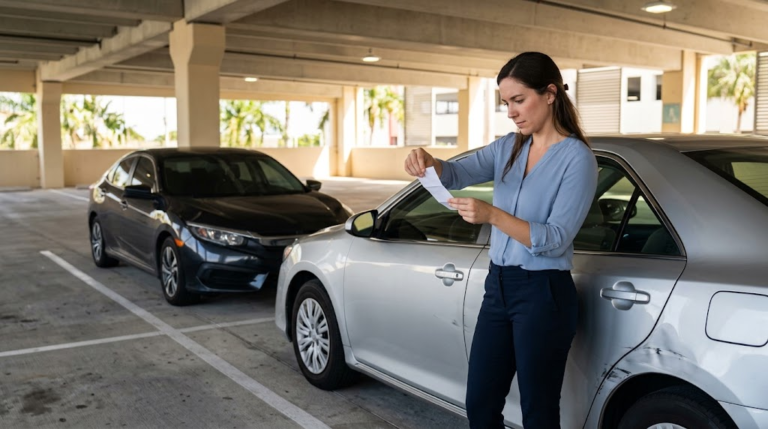
Crashes inside garages or retail lots around Town Center at Boca Raton seem minor because speeds are low.
However, when a vehicle backs out of a space blindly, it can catch another car at an odd angle, twisting wrists, straining knees, or causing joint inflammation.
The 14-Day Clock: How Florida PIP Laws Work for Your Care
One of the biggest mistakes people make after a crash in Florida is waiting too long to get checked out by a doctor.
After an accident, your body pumps out adrenaline, which masks pain for hours or days.
You might feel fine at the scene, only to wake up three days later with a stiff neck or a throbbing back.
The Strict 14-Day Deadline
Under Florida Statute § 627.736, known as the Florida PIP 14 day rule, you must receive an initial medical evaluation from a qualified provider within 14 calendar days of the crash.
If you miss that two-week window, your auto insurance carrier has the legal right to deny your Personal Injury Protection (PIP) benefits entirely, leaving you holding the bill for your care.
Medical Limits: Emergency Medical Conditions vs Non-EMC
Florida law requires every driver to carry at least $10,000 in PIP coverage to pay for medical care regardless of who caused the crash.
Florida PIP policies generally provide up to $10,000 in combined medical and disability benefits.
Covered medical benefits are generally limited to $2,500 unless a qualifying clinician determines that the patient had an emergency medical condition
Treating Injuries Without Paying Upfront
Getting proper medical care after a Boca Raton crash should not drain your bank account.
Primary care doctors frequently refuse auto accident patients because they do not process auto insurance, and ER visits come with high out-of-pocket deductibles.
Specialized accident injury centers treat crash victims under an agreement called a Letter of Protection (LOP).
A Letter of Protection is an arrangement under which a provider may defer payment while a claim is pending. Ask for its written terms and who remains responsible for any unpaid balance
Calling a dedicated Florida car crash helpline like 844-324-HURT puts you in touch with accredited medical providers who treat injuries under PIP or an LOP with zero out-of-pocket costs to you.
Understanding Fault Under Florida Law and What It Means for Your Claim
Because Florida uses a no-fault insurance system, your own PIP coverage pays your initial medical bills no matter who caused the accident.
But if you have serious injuries, missed work, or lasting pain, $10,000 in PIP rarely covers the full damage.
To seek additional recovery from the at-fault driver’s insurance, you need to satisfy two key legal standards.
The Serious Injury Threshold
Under Florida Statute § 627.737, you can make a claim against the other driver for non-economic damages, like pain and suffering, if your medical records prove you met the serious injury threshold. That means showing one of the following:
- Significant and permanent loss of an important bodily function.
- Permanent injury within a reasonable degree of medical probability.
- Significant and permanent scarring or disfigurement.
- Death.
Florida’s 50% Fault Cap
When you bring a claim against the at-fault driver, Florida’s fault rules determine how much you can recover. Florida Statute § 768.81 sets a modified comparative negligence standard.
Your final compensation depends on your share of responsibility for the crash:
- If you are found to be more than 50% at fault, you cannot recover any money from the other driver.
- If you are 50% or less at fault, your compensation is reduced by your share of blame.
What to Expect As Your Insurance Claim Moves Forward
Resolving an auto accident claim follows a sensible timeline from the day of the impact to the final agreement.
Opening the Claim:
Report the crash to local police and notify your auto insurance carrier to open your PIP file.
Stick to simple facts about where and when the accident happened.
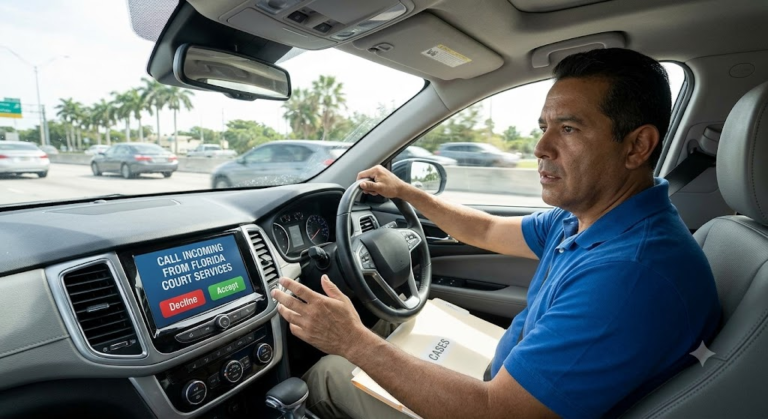
Do not give recorded statements to the other driver’s insurance company without guidance.
Getting Treated and Diagnosed:
See a qualified doctor within the 14-day PIP window.
Stick to your treatment plan, go to your physical therapy sessions, and complete any recommended diagnostic scans.
Your medical chart is the primary proof connecting your physical injuries directly to the collision.
Calculating Damages and Sending a Demand:
When your health stabilizes and your doctor states you have reached Maximum Medical Improvement (MMI), your medical bills, pay stubs for lost work, and car repair receipts are gathered together.
A formal demand package is sent to the at-fault driver’s insurance carrier asking for fair settlement.
Settlement Discussions or Court Filing:
The insurance company reviews your demand package and makes an offer. Many claims settle right here.
If the insurance adjuster refuses to offer a fair payout or denies responsibility, your attorney can file a lawsuit to protect your interests.
Timelines and Deadlines
Basic claims with minor car damage and short-term doctor visits often wrap up in a few months. Claims with serious injuries, surgeries, or disputed fault can take anywhere from 6 to 18 months.
Florida’s statute of limitations for personal injury lawsuits based on negligence is two years from the date of the crash under Florida Statute § 95.11. Moving quickly ensures evidence stays intact and witness memories remain sharp.
How to Get Your Boca Raton Police Crash Report
An official police crash report is a crucial document for fixing your vehicle and handling your injury claim.
If a local police department officer came to your scene, you can pick up a copy directly from their records office:
- In Person: Go to the responding police department’s Records Division. Bring a valid photo ID and your crash case number.
- Online: Request and download a PDF copy of your report through the official city or local agency records portal online.
If a local agency, county sheriff’s office, or Florida Highway Patrol handled your crash, your report goes to the state database.
You can search for and purchase your report on the official FLHSMV Florida Crash Portal by entering your crash date, county, and driver’s license or crash report number.
Why Making One Call to 844-324-HURT Takes the Weight Off Your Shoulders
Trying to coordinate doctor appointments, insurance calls, car repairs, and missed work after a crash gets overwhelming fast.
844-324-HURT operates as a free, 24/7 statewide helpline built to guide injured Floridians through the whole process step by step.
Here is how 844-324-HURT helps you out:
- Immediate Doctor Appointments: Connect directly with vetted local medical centers and imaging clinics in Boca Raton, Delray Beach, and West Palm Beach that focus on auto accident injuries.
- Medical Care & Treatment Options: We can help you explore providers who accept PIP or may offer treatment under a Letter of Protection (LOP). Final coverage and any out-of-pocket amounts depend on your policy, provider agreement, and case.
- Vetted Legal Help: Connect with experienced Florida personal injury attorneys who know Palm Beach County courts and understand how to deal with insurance adjusters.
- 24/7 Availability Across Florida: Whether your crash happened in Boca Raton, Fort Lauderdale, Miami, Orlando, or Tampa, help is ready whenever you call.
Call 844-324-HURT today to safeguard your health, your rights, and your peace of mind.
Frequently Asked Questions
What counts as approved medical care under the Florida PIP 14 day rule?
To satisfy the Florida PIP 14 day rule (Florida Statute § 627.736), your initial medical evaluation must be completed by a licensed medical doctor, doctor of osteopathy, physician assistant, advanced practice registered nurse, chiropractor, dentist, or received through emergency hospital care or EMS paramedics. Massage therapy or physical therapy visits alone do not satisfy the initial evaluation requirement under Florida law.
Should I call 911 or non-emergency police dispatch after a crash in Boca Raton?
Call 911 if anyone has visible injuries, severe pain, or loss of consciousness, or if a wrecked car is blocking active travel lanes on high-speed roads. If everyone is uninjured and cars can be moved safely to a parking lot, call the Boca Raton Police Department non-emergency line to request an officer for a crash report without triggering emergency response fees.
Does PIP coverage work if I was driving an SUV or car owned by someone else?
Yes. Florida PIP coverage follows the person rather than the car. If you own a vehicle in Florida with active PIP insurance, your policy generally covers you even if you were driving a friend’s car or SUV. If you do not own a vehicle, PIP benefits may extend from a resident relative’s policy or the vehicle owner’s coverage.
Can I get medical care after an accident in Boca Raton without paying upfront out-of-pocket fees?
Yes. By using PIP benefits or a Letter of Protection (LOP) arranged through qualified medical providers, you can receive comprehensive diagnostic imaging, physical therapy, and specialist care with zero out-of-pocket costs at the time of service.
How quickly can I get a copy of my Boca Raton police crash report?
Police crash reports in Florida are typically ready within 3 to 10 business days following an incident. You can pick up a physical copy in person at the Boca Raton Police Services Department on NW Boca Raton Blvd or purchase a digital PDF copy online through the Florida Crash Portal.



 EN
EN  ES
ES