
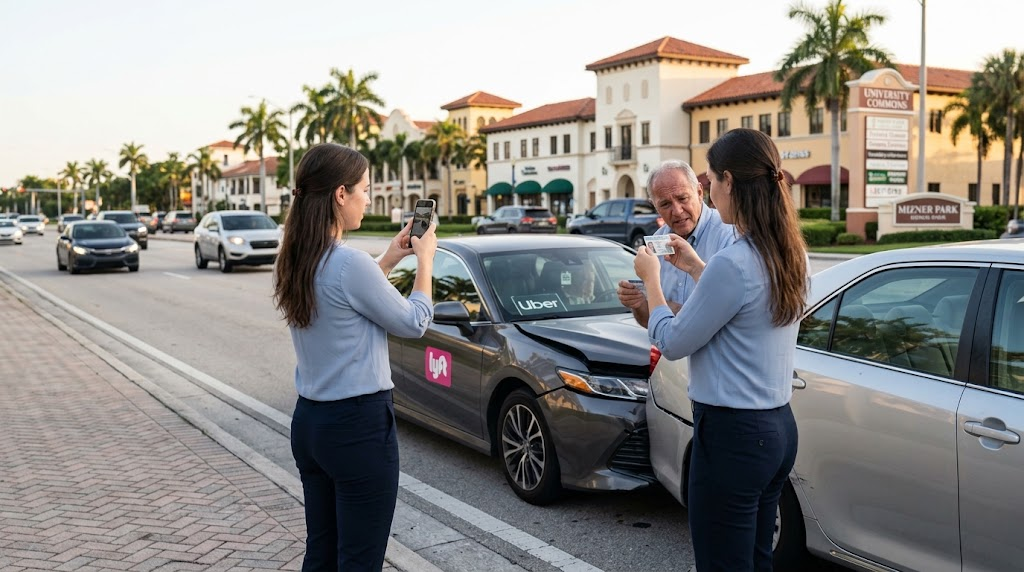
Catching an Uber home after dinner at Mizner Park, getting a Lyft ride from the FAU campus, or taking a car to Palm Beach International Airport is second nature for Boca Raton residents.
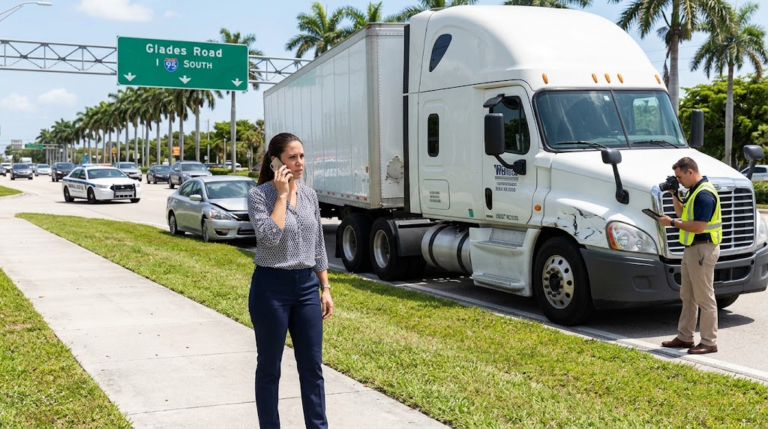
But when a rideshare driver slams on the brakes along Glades Road or gets broadsided at a busy I-95 intersection, your routine turns into chaos in a second.
Filing an injury claim after a rideshare collision is much more complicated than a standard two-car accident.
Instead of dealing with just one driver’s personal insurance policy, you face corporate legal adjusters, multi-layered commercial insurance policies, and complex state regulations.
Whether you were a paying passenger in the backseat, a driver in another car hit by a rideshare driver, or a pedestrian crossing near Federal Highway, understanding how rideshare insurance operates in Florida protects your health and financial recovery.
How Uber and Lyft Insurance Coverage Works in Florida
The most confusing part of a rideshare crash is figuring out which insurance policy pays for your damages.
In Florida, Uber and Lyft coverage shifts automatically based on what the driver was doing on the app at the exact moment of impact.
Under Florida Statute § 627.748, rideshare companies must maintain specific levels of insurance across three distinct driver operational periods.
| Driver App Status | Operational Phase | Primary Insurance Coverage Available |
|---|---|---|
| Period 1: App Turned Off | The driver is using the vehicle for personal driving only. | Driver's personal auto insurance applies ($10,000 PIP and personal liability). Uber and Lyft provide zero coverage. |
| Period 2: App On, Waiting for a Match | The driver is logged into the app in Boca Raton, but has not accepted a trip request. | Uber and Lyft provide contingent commercial coverage: $50,000 per person / $100,000 per crash for bodily injury, plus $25,000 for property damage. |
| Period 3: App On, En Route or Passenger Inside | The driver accepted a ride request or is actively transporting a passenger. | Uber and Lyft provide a primary commercial insurance policy of up to $1,000,000 in third-party liability and uninsured motorist coverage. |
Knowing which phase the driver was in determines whether you are dealing with a standard personal policy or a $1,000,000 corporate insurance policy.
4 Crucial Steps to Take Right After a Boca Raton Rideshare Collision
Taking structured action after an Uber or Lyft crash preserves critical evidence that corporate insurance adjusters often try to dispute later.
1. Personal Safety and Appropriate Police Dispatch
Immediate physical safety comes first. A quick check of yourself and your passengers will tell you if urgent medical attention is required.
Call 911 if anyone is injured, may need urgent medical attention, or the crash creates an immediate danger.
For a minor crash with no apparent injuries or hazards, contact local non-emergency dispatch
If everyone is stable and the vehicles can be moved safely off busy thoroughfares like Glades Road or Palmetto Park Road, contact the Boca Raton Police Department non-emergency line (or Palm Beach County Sheriff dispatch for West Boca locations).
Requesting an officer via non-emergency dispatch ensures an official police crash report is documented on site without generating unneeded emergency response fees.
2. Rideshare App Records and Trip Verification
Preserving digital proof from your Uber or Lyft app is essential before leaving the scene.
Passengers should take quick screenshots of their active trip screen right on their phone, capturing the driver’s full name, profile photo, vehicle make and model, license plate number, digital receipt, and route map.
Rideshare applications sometimes reset or clear active trip screens once a crash is reported to support, so having your own saved screenshots provides permanent proof that the driver was actively transporting you in Period 3 when the impact occurred.
3. Scene Photos and Bystander Statements
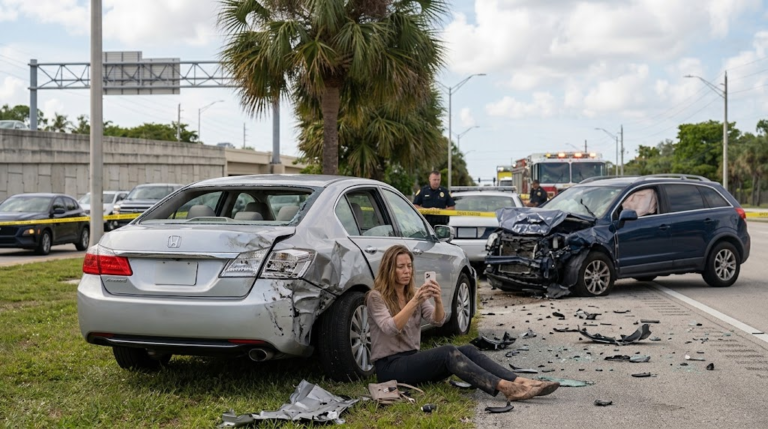
Smartphone photos of the crash site provide indisputable physical evidence when corporate adjusters attempt to minimize property damage or deny liability.
Smartphone cameras can capture close-up shots of crushed bumpers and shattered glass, along with wide-angle photos showing lane markers, traffic signals, skid marks, and weather conditions on Federal Highway or Military Trail.
Taking pictures of the official Uber or Lyft decal displayed on the windshield is also helpful.
Bystanders, store clerks, or other drivers who saw the collision happen can share their names and contact details, giving your claim independent witness support.
4. Medical Checkups and the 14-Day Insurance Window
Professional medical checks within two weeks are required to protect your insurance rights under Florida law.
Adrenaline masks soft-tissue tears, whiplash, and mild concussions for 24 to 48 hours, meaning you might feel fine at the crash site only to wake up days later in severe pain.
Florida Statute § 627.736 establishes the Florida PIP 14 day rule, requiring an official medical evaluation within 14 calendar days of the accident.
Missing this two-week window allows auto insurance carriers to legally deny Personal Injury Protection benefits entirely, leaving you personally responsible for all treatment expenses.
Common Causes of Uber and Lyft Crashes in Boca Raton
Rideshare drivers face unique workplace hazards that increase collision risks across Palm Beach County roadways.
Some of the most common factors contributing to local rideshare crashes include:
GPS and Mobile App Distractions:
Drivers looking down at navigation maps on dashboard mounts or tapping screen prompts to accept new ride requests while moving in active traffic along Military Trail.Unsafe Pickup and Drop-off Moves:
Pulling over suddenly into bike lanes, double-parking near Mizner Park retail corridors, or stopping in active travel lanes along Federal Highway creates severe rear-end risks for trailing cars.Fatigue from Long Driving Shifts:
Operating a vehicle for hours after finishing full-time day jobs leads to slowed reaction times during late-night weekend hours.Navigating Unfamiliar Roads:
Drivers servicing out-of-town visitors often miss turn signals, perform last-second lane changes on I-95 exit ramps, or make improper U-turns near the FAU campus.
Financial Compensation Categories in Boca Raton Rideshare Claims
A fair insurance settlement should reflect every single hardship caused by the collision, rather than the initial low offer an insurance adjuster presents.
Documenting the full extent of your physical and financial losses is essential before entering settlement talks with corporate insurers.
Economic Damages (Tangible Financial Losses)
Economic damages cover the direct out-of-pocket costs tied to your crash and ongoing medical care.
These losses come with clear documentation, such as invoices, billing statements, and pay stubs:
Immediate Emergency Care:
Ambulance transport fees, emergency room visits, diagnostic X-rays, and emergency surgery costs.Ongoing Rehabilitation:
Physical therapy sessions, chiropractic care, specialist consultations, and prescription medications.Lost Income and Future Earning Capacity:
Paychecks missed during your recovery period and long-term reductions in your ability to earn a living due to permanent physical limitations.Property Damage Expenses:
Body shop repair costs for your personal vehicle, rental car fees, or actual cash value reimbursement if your car was totaled.
Non-Economic Damages (Personal and Quality-of-Life Impacts)
Non-economic damages address the personal, non-financial consequences of an injury.
While these losses do not arrive with an itemized receipt, they represent real physical and emotional harm:
Physical Pain and Suffering:
Physical discomfort, chronic joint pain, and nerve irritation resulting from collision injuries.Emotional Distress:
Mental anguish, sleep disruptions, post-traumatic stress, and anxiety experienced after a traumatic crash.Permanent Impairment and Scarring:
Physical disability, loss of mobility, facial disfigurement, or permanent surgical scarring.- Loss of Enjoyment of Life: Inability to participate in daily hobbies, recreational sports, or family activities you enjoyed before the crash.
Punitive Damages (Holding Reckless Actors Accountable)
In rare cases involving extreme misconduct, Florida courts may allow punitive damages.
Under Florida Statute § 768.72, punitive damages are not intended to pay for specific bills, but rather to punish gross negligence or intentional misconduct, such as a rideshare driver operating under the influence of drugs or alcohol or engaging in reckless street racing.
Physical Injuries Sustained in High-Impact Rideshare Crashes
Rideshare collisions across Boca Raton often involve sudden stops, side-impact broadsides at intersections, and multi-vehicle chain reactions on I-95.
These sudden forces generate a wide range of physical injuries, many of which develop symptoms slowly over several days.
Head and Brain Trauma:
Concussions, traumatic brain injuries (TBIs), and cognitive disorientation caused by your head striking a window, headrest, or steering wheel.
Spinal Cord and Disc Damage:
Whiplash, herniated cervical discs, lumbar sprains, and nerve compression resulting from sudden whip-like motions during impact.
Orthopedic Fractures and Joint Injuries:
Broken wrist bones, collarbone fractures, knee impacts, and rotator cuff tears caused by brace reactions during impact.
Internal Organ Damage:
Deep abdominal bruising, internal bleeding, and organ trauma resulting from seatbelt restraint pressure during high-speed deceleration.
Psychological Trauma:
Driving phobias, panic attacks, and post-traumatic stress disorder (PTSD) that linger long after physical wounds heal.
Getting evaluated by a medical professional immediately after a crash ensures that hidden injuries are identified early and recorded in your official medical record.
Essential Florida Statutes Impacting Rideshare Claims
Navigating an Uber or Lyft injury claim in South Florida requires a clear understanding of the specific state statutes that govern insurance rules, fault allocations, and court filing deadlines.
Florida Transportation Network Company Law (Fla. Stat. § 627.748)
Florida Statute § 627.748 sets strict insurance requirements for rideshare companies like Uber and Lyft.
This law establishes the tiered insurance system based on the driver’s app status (Period 1, Period 2, and Period 3), mandating up to $1,000,000 in commercial liability coverage when a driver is actively carrying a passenger or en route to a pickup in Boca Raton.
No-Fault PIP Rules and Serious Injury Limits (Fla. Stat. § 627.736 & § 627.737)
Under Florida Statute § 627.736, your personal $10,000 Personal Injury Protection (PIP) policy provides the first layer of medical coverage regardless of who caused the crash.
You must receive an initial medical checkup within 14 calendar days of the accident to preserve these benefits.
To step outside the no-fault system and seek non-economic damages (such as pain and suffering) from the rideshare driver’s commercial insurance, your medical records must satisfy the serious injury threshold under Florida Statute § 627.737.
This requires medical proof of permanent injury, significant scarring, or loss of a vital bodily function.
Modified Comparative Negligence Standard (Fla. Stat. § 768.81)
Under Florida Statute § 768.81, Florida follows a modified comparative fault rule:
- Being found more than 50% at fault for a crash completely bars you from recovering compensation from the other driver.
- Being 50% or less at fault reduces your final compensation by your exact percentage of responsibility.
Because rideshare insurers routinely attempt to shift blame onto other drivers to minimize their $1,000,000 policy exposure, gathering clear evidence at the scene is critical.
Two-Year Statute of Limitations (Fla. Stat. § 95.11)
Under Florida Statute § 95.11(5)(a), the legal deadline to file a personal injury lawsuit based on negligence is two years from the date of the crash.
Missing this statutory deadline results in the permanent loss of your right to pursue financial compensation in court.
How 844-324-HURT Protects Your Medical Care and Legal Rights
Trying to negotiate with corporate rideshare adjusters, organize hospital bills, and find the right doctors while recovering from a crash is exhausting.
Here is how 844-324-HURT supports your recovery:
Immediate Access to Accredited Medical Providers:
Connect directly with local medical centers and diagnostic specialists in Boca Raton, Delray Beach, and West Palm Beach who understand rideshare trauma.Zero Out-of-Pocket Care:
Receive initial medical checkups, diagnostic MRIs, and physical therapy under your PIP benefits or a Letter of Protection (LOP), so you pay nothing upfront for your care.Vetted Rideshare Personal Injury Attorneys:
Gain access to experienced Florida attorneys who specialize in corporate rideshare claims, know how to secure app server data, and fight aggressive insurance tactics.24/7 Statewide Helpline:
Professional guidance is ready around the clock whether your accident happened in Boca Raton, Fort Lauderdale, Miami, Orlando, Tampa, or anywhere in Florida.
Taking Control After Your Boca Raton Rideshare Accident
A sudden Uber or Lyft collision on Glades Road, Federal Highway, or I-95 can throw your life into uncertainty.
Taking fast action puts you back in control of your physical healing and financial recovery.
Document the scene, take screenshots of your trip details, and make sure you get checked out by a doctor within the strict 14-day PIP window.
Avoid providing recorded statements to corporate insurance adjusters before speaking with a professional advocate.
You do not have to tackle corporate rideshare insurers alone.
A quick call to 844-324-HURT connects you immediately with trusted local medical providers and proven legal guidance across Boca Raton and throughout Florida.
Call 844-324-HURT today to protect your health, your rights, and your peace of mind.
Frequently Asked Questions
What should I do if I was a passenger in an Uber or Lyft during a crash in Boca Raton?
Check for injuries first and request police dispatch. Take screenshots of your rideshare app showing your active trip details, driver information, and map route. Collect contact information from all involved drivers and witnesses, and seek a professional medical checkup within 14 days to preserve your PIP coverage.
Does my personal auto insurance cover me if I am an Uber or Lyft passenger?
Yes. Under Florida law, your personal auto insurance policy’s Personal Injury Protection (PIP) coverage acts as your primary insurance for initial medical expenses even if you were riding as a passenger in a rideshare vehicle. Once your PIP limit is reached, Uber or Lyft’s $1,000,000 commercial policy covers remaining damages.
Can I receive medical treatment after a rideshare crash if I do not have health insurance?
Yes. 844-324-HURT connects injured victims with local medical providers who treat rideshare crash injuries under your mandatory Florida PIP auto coverage or a Letter of Protection (LOP). Under an LOP, you pay zero out-of-pocket costs upfront, and medical bills are deferred until your insurance settlement resolves.
How long do I have to file an Uber or Lyft injury claim in Florida?
Under Florida Statute § 95.11, the statute of limitations for personal injury claims based on negligence is two years from the date of the crash for accidents occurring on or after March 24, 2023. However, you must receive your initial medical checkup within 14 days of the crash to access your PIP insurance benefits.



 EN
 ES