

Waking up to the reality of a wrecked vehicle is a nightmare for any driver in the Sunshine State. Whether you were navigating the busy I-95 in Miami, commuting through the tourist corridors of Orlando, or enjoying the coastal breeze in Tampa, a car accident can turn your life upside down in seconds.
When an insurance adjuster finally uses the word “totaled,” it triggers a complex chain of legal and financial events that most people are unprepared to handle alone.
Navigating the Florida statutes regarding total loss, insurance payouts, and medical recovery requires more than just a quick internet search. Because the laws here are unique, specifically regarding our “no-fault” insurance system, you need a dedicated resource to protect your interests.
At 844-324-Hurt, we operate as a comprehensive injury helpline and a dedicated network of attorneys. We do not just provide legal advice; instead, we bridge the gap between your physical recovery and your financial claim by connecting you with trusted medical centers across Florida.
Understanding the "Total Loss" Threshold in Florida
In the state of Florida, a vehicle is typically considered a “total loss” when the cost of repairs plus the salvage value equals or exceeds 80% of the car’s Actual Cash Value (ACV).
This is a statutory requirement, which means the insurance company does not simply get to guess if your car is finished. They must follow specific state guidelines to reach this determination.
When your vehicle is totally leased, rented or even if you own it outright, the insurance company will eventually offer a settlement. However, this settlement often fails to cover the full cost of a replacement or the remaining balance on a high-interest car loan.
This is exactly where a car accident lawyer in Miami or a specialist in your specific Florida city becomes invaluable. These professionals can negotiate the ACV calculation to ensure you are not left in a financial hole due to an undervalued appraisal.
How the Actual Cash Value is Calculated
Insurance companies use proprietary software to determine what your car was worth the split second before the impact.
They look at local sales of similar makes and models, the condition of your interior, and your mileage. Consequently, if you have recently put new tires on the car or performed major engine work, you should provide those receipts to your adjuster immediately.
If the insurance company refuses to acknowledge these upgrades, our injury helpline can connect you with legal experts who know how to challenge these low-ball valuations.
Managing a Turo Total Loss and Rental Car Complications
The rise of peer-to-peer car sharing has created a new world of insurance headaches for Florida residents and visitors alike.
If you are currently dealing with a Turo total loss, you will find that the process differs significantly from a standard claim involving a company like Hertz or Enterprise.
The Financial Risks of Turo Claims
Many users frequently wonder about what happens if you don’t pay Turo damage.
If you happen to decline their protection plans and your personal auto insurance denies the claim because of a “commercial use” exclusion, Turo may pursue you directly through aggressive collections or legal action.
This can ruin your credit and lead to lawsuits. Furthermore, if you are the owner of the car (the host) and your vehicle is totaled, navigating the Turo “Fair Value” payout requires a deep understanding of their specific terms of service.
Rental Car Timelines After a Total Loss
A common point of stress for accident victims involves the question of how long do you get a rental car if your car is totaled?
Generally, once a total loss settlement is officially offered, the insurance company will only pay for a rental for an additional 3 to 7 days. This creates a “gap crisis” where you may still be waiting for your check but no longer have a way to get to work.
If you find yourself asking how long can I keep the rental car after total loss while you scramble for a down payment, you should know that an attorney can sometimes negotiate an extension with the adjuster.
This is particularly true if the insurance company was slow in processing your initial claim.
Dealing with a Car Accident on Vacation in Florida
Florida is a global tourist hub, welcoming millions of visitors every year. If you suffer a car accident on vacation in a destination like Fort Lauderdale, Destin, or Key West, you face the double burden of dealing with a totaled vehicle and finding medical care far from home.
What Happens When You Total a Rental Car?
If you are visiting from out of state and find yourself asking what happens when you total a rental car, the answer usually involves a mix of the rental company’s insurance and your credit card’s secondary coverage.
Because these cases often involve multiple jurisdictions and various insurance layers, calling our injury helpline at 844-324-Hurt is the fastest way to get local Florida experts to handle the paperwork while you return home to recover.
Additionally, you must consider the “loss of use” fees. Rental companies often charge you for the daily profit they lose while the car is sitting in a salvage yard.
A skilled car accident attorney in Miami can often get these extra fees waived or covered by the at-fault party’s insurance.
Ensuring Your Safety: How to Spot a Personal Injury Lawyer Scam
In the chaotic aftermath of a collision, your phone might start ringing more than usual. While finding a reliable injury helpline is a vital step in your recovery, it is equally important to distinguish between legitimate support and dangerous personal injury lawyer scam tactics.
Protecting yourself in the Florida legal landscape means knowing the difference between a supportive professional network and an illegal “runner” or “capper” operation.
Understanding Ethical Outreach vs. Illegal Solicitation
It is important to clarify that while a professional network like 844-324-Hurt serves as a bridge to connect you with trusted medical centers and experienced attorneys, there are strict ethical boundaries in place.
In Florida, it is illegal for a lawyer to personally “cold-call” or approach an accident victim to solicit business.
At 844-324-Hurt, we operate as a dedicated resource for those seeking help. We prioritize your well-being by facilitating your path to recovery without the high-pressure tactics used by scammers.
Unlike fraudulent actors, we focus on transparency and do not demand immediate commitments or financial information.
Identifying the Red Flags of Fraud
To stay safe, keep a sharp eye out for these fraudulent behaviors that have become increasingly common in cities like Miami and Jacksonville:
- They contact you first through “cold-calls”: Real personal injury lawyers do not call accident victims out of the blue. If you receive an unsolicited call from someone claiming to be an attorney, proceed with extreme caution.
- They demand payment upfront: Genuine law firms in our network work on a contingency basis. This means you do not pay unless you settle the case. If someone asks for “administrative fees” or credit card details to “start your claim,” it is a major red flag.
- They refuse to share credentials: A licensed Florida lawyer will gladly provide their Bar Association number and firm details. If a caller is vague about their identity or office location, they are likely not who they say they are.
- Their communication feels rushed or aggressive: Scammers profit by pushing you into quick decisions. If you feel pressured to sign a contract before you have even seen a doctor or reviewed a police report, you should walk away immediately.
- Their digital presence looks suspicious: Fraudsters are becoming increasingly creative with fake websites and emails. Consequently, you should look for grammatical errors, missing contact details, or email domains that do not match a legitimate firm’s name.
The 844-324-Hurt Standard of Integrity
By contrast, our approach at 844-324-Hurt is built on a “health-first” philosophy. We believe that your priority should be physical restoration.
Therefore, we ensure you are connected to trusted medical centers to document your body injury claim properly before any legal steps are taken.
This ensures that your case is built on a foundation of medical facts and professional integrity, protecting you from the empty promises and predatory tactics of a personal injury lawyer scam.
Maximizing Your Body Injury Claim and Physical Recovery
A totaled car is technically a property damage issue, but your physical well-being is a body injury claim issue.
In Florida’s “no-fault” system, your Personal Injury Protection (PIP) covers the initial $10,000 of medical bills. However, when a car is severe enough to be totaled, the physical impact usually exceeds those small limits.
Documenting Your Injuries
Whether you were in a vehicle that was totally leased or a private car, you must document every ache and pain. Soft tissue injuries, such as whiplash or back strain, often take days to manifest.
Our network of attorneys works closely with healthcare providers to ensure that your medical records accurately reflect the trauma of the crash.
This documentation is the cornerstone of a successful settlement. Without a clear link between the accident and your medical treatment, the insurance company will likely try to deny your claim.
Steps to Take Immediately After Your Car is Totaled
If you are standing on the side of the road or sitting in a hospital bed right now, follow these steps to protect your future claim:
- Prioritize Safety and Health: Seek medical attention immediately, even if you feel “fine.” Adrenaline often masks serious injuries.
- Contact Law Enforcement: Ensure a police report is filed. This is a vital piece of evidence for both your property damage and your body injury claim.
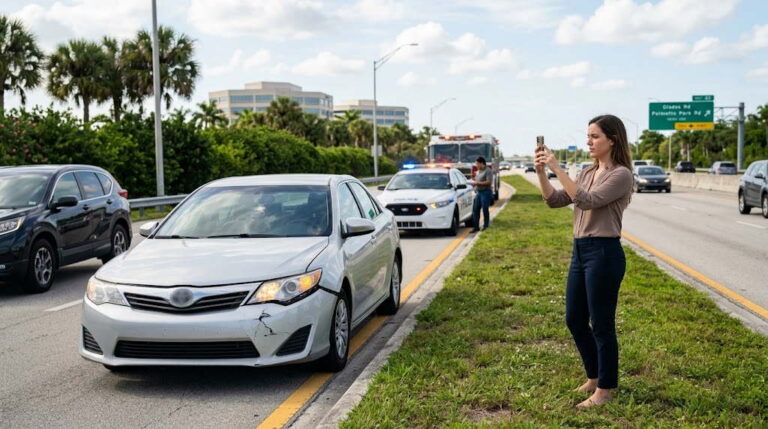
- Document the Scene: Take photos of the vehicles, the road conditions, and any visible injuries.
- Call the Injury Helpline: Contact 844-324-Hurt to speak with our network. We can help you find trusted medical centers and evaluate if you are being targeted by a scam.
- Notify Your Insurer: Report the accident, but avoid giving a recorded statement until you have consulted with a professional from our network
Take the Next Step Toward Your Recovery
The aftermath of a total loss accident is a race against time. Between rental car deadlines, medical filing windows, and insurance company pressure, you need a team that understands the Florida landscape.
Whether you are struggling with a Turo total loss, a complex body injury claim, or simply trying to figure out how long you get a rental car if your car is totaled, help is just a phone call away.
Do not let the insurance companies dictate the value of your life or your property. At 844-324-Hurt, we are more than just a phone number; we are a dedicated network of legal professionals and medical providers committed to your total recovery.
Would you like me to help you prepare a list of specific questions to ask the insurance adjuster regarding your car’s valuation? Contact 844-324-Hurt today to connect with our network and start your journey back to normalcy.
FAQs: What People Also Ask About Florida Total Loss
1. Can I keep my car if the insurance company totals it?
Yes, in Florida, you can choose what is called a “preferred retention.” In this scenario, the insurance company will deduct the salvage value from your settlement check, and you will be issued a “Salvage Title.” You should be aware that it can be very difficult to insure or sell a salvage-titled vehicle in the future, and the cost of repairs may far exceed the car’s actual value.
2. Does Florida’s No-Fault law apply to my totaled vehicle?
No, it does not. Florida’s No-Fault (PIP) law applies only to medical bills and lost wages. Property damage, which includes your totaled car, is based on who was at fault for the accident. If the other driver caused the crash, their property damage liability insurance is responsible for paying for your vehicle.
3. What happens if I don't have enough insurance to cover a totaled rental?
If you find yourself asking what happens if you total a rental car without adequate coverage, you may be personally liable for the difference. This is why we recommend checking your credit card benefits, as many high-end cards provide secondary rental insurance that can save you thousands of dollars in a total loss scenario.
4. Is the insurance company's first offer for my car final?
Absolutely not. Insurance adjusters often use software that finds the lowest possible “comparables” in your area. You have the right to counter-offer by providing your own research, including local listings for similar cars at higher prices. Having a lawyer handle this negotiation often results in a significantly higher payout.
5. What if the accident was caused by an uninsured driver?
Florida has one of the highest rates of uninsured drivers in the country. If your car is totaled by someone without insurance, you must rely on your own “Uninsured Motorist” (UM) coverage or your “Collision” coverage. If you do not have these specific add-ons, recovering money for your car can be extremely difficult without filing a personal lawsuit.
6. How does a "totally leased rented" vehicle settlement work?
If the car is leased, the settlement check generally goes directly to the leasing company, such as Ford Credit or Honda Financial, because they are the legal owners. If the insurance payout is less than what you still owe on the lease, you are responsible for the “gap” amount unless you specifically purchased Gap Insurance.



 EN
EN  ES
ES